



Could vacant storefronts become the key to solving regional housing shortages?
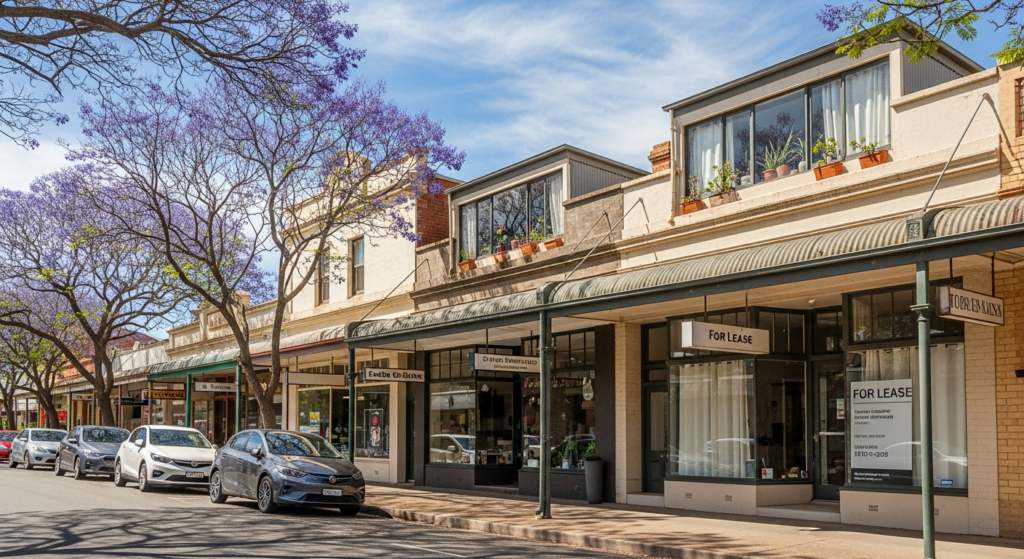
Walk down the main street of almost any regional Australian town and you will see them: empty shopfronts with peeling paint, dusty windows, and faded For Lease signs. As traditional retail businesses close and regional centres evolve, government policymakers are now exploring whether these vacant commercial spaces could help address Australia’s housing crisis. The concept is straightforward but the execution is complex, and if you are considering buying converted property or investing in regional areas, understanding the opportunity and the challenges matters for your finance options.
Why empty shops
Regional town centres across Australia are feeling the combined pressure of online shopping growth, changing consumer habits, and population drift toward capital cities. Empty commercial premises are now a common sight from the Hunter Valley to the Sunshine Coast, from Gippsland to the Wheatbelt. These vacant buildings represent wasted space in communities that often have acute housing shortages.
The federal government is weighing policy options to encourage conversion of these empty shops into residential dwellings. The idea is not new internationally but it represents a significant shift in Australian planning frameworks, which have traditionally kept strict boundaries between commercial and residential zones. Converting a former bakery, newsagent, or pharmacy into an apartment or townhouse requires navigating council regulations, building codes, and infrastructure capacity, but the potential upside is substantial: housing supply where people need it, revitalised main streets, and renewed economic activity in struggling town centres.
For property buyers, converted shopfronts can offer unique character and central locations at prices well below what equivalent space would cost in metropolitan areas. For investors, regional property markets in Victoria and beyond are showing renewed interest as remote work opens lifestyle options previously unavailable to city workers.
The policy landscape
Government consideration of shop to housing conversions reflects broader housing policy priorities in 2026. With rental affordability stretched nationwide and first home buyers facing steep entry prices even in regional areas, any initiative that adds supply without greenfield sprawl attracts serious attention.
The mechanisms under discussion likely include planning reform incentives, grants or tax concessions for property owners who undertake conversions, and streamlined approval processes through local councils. State governments control planning law, so federal policy would need to work through intergovernmental agreements or funding tied to reform conditions. Early indications suggest pilot programs in selected regional centres may test the concept before broader rollout.
For borrowers, policy shifts like these can open finance pathways that did not previously exist. Lenders are increasingly comfortable with unique properties and unusual home types when the underlying market fundamentals are sound. If government backing de-risks conversions through clearer regulations and proven demand, more lenders will offer competitive rates for what might once have been considered niche or specialist properties.
Buyer considerations
Purchasing a converted shopfront property is not the same as buying a conventional house or apartment. You need to weigh several practical and financial factors before committing.
Zoning and use rights. Confirm the property is legally approved for residential use and that council has issued the necessary occupation certificates. A commercial to residential rezoning must be complete and documented, not assumed or pending.
Building compliance. Older commercial buildings may not meet current residential building standards for insulation, ventilation, fire safety, and accessibility. A thorough pre-purchase inspection by a building surveyor with experience in conversions is essential. Retrofit costs can be high if core systems need upgrading.
Natural light and layout. Shop premises were designed for retail, not living. Deep floor plates, limited windows, and street-facing frontages can create livability challenges. Walk through the space carefully and imagine daily life there, not just the novelty appeal.
Noise and parking. Main street locations mean traffic noise, late-night activity from nearby venues, and limited off-street parking. If you value peace and car access, a converted shop might not suit your lifestyle even if the price looks attractive.
Resale and rental potential. The market for converted commercial properties is still emerging in most regional areas. Consider whether you could rent the property if your plans change, and whether future buyers will value the location and layout as much as you do.
Finance options
Lenders assess converted shopfront properties on a case by case basis. Mainstream banks will usually consider lending if the property is fully residential, has a valuation that supports the loan amount, and sits in a demonstrable market where comparable sales exist. If the conversion is recent or the property is highly unusual, you may need to approach specialist or non-bank lenders who have more flexible serviceability and security criteria.
Loan to value ratios can be more conservative than for standard residential property. Expect to provide a larger deposit, often 20 percent or more, particularly if the property is in a small town with limited sales data. Interest rates might also be slightly higher to reflect perceived risk, although competition among lenders is narrowing those gaps as the market for alternative housing grows.
If you are building or undertaking a major conversion yourself, a construction loan structure applies. These loans release funds in stages as work progresses, and require detailed plans, builder contracts, and council approvals before the first drawdown. The process is more involved than a standard purchase loan but it allows you to finance both the property acquisition and the fit-out.
For investors, rental yield on main street conversions can be attractive if the location suits tenants seeking walkable amenity and lower living costs. Lenders will assess rental income as part of serviceability, but they will also scrutinise vacancy risk and tenant demand in that specific town. Strong fundamentals matter: employment base, population stability, and infrastructure investment all influence how lenders view regional and lifestyle property finance.
Regional opportunities
The push to convert empty shops into housing aligns with broader demographic and economic shifts across regional Australia. Many towns have seen population growth as workers embrace remote and hybrid arrangements, retirees seek affordability outside capital cities, and families look for space and community. Housing supply has not kept pace, pushing rents higher and limiting buyer choice.
Converted shopfronts offer a faster path to additional dwellings than new subdivisions, which require lengthy planning approvals, infrastructure investment, and construction timelines. For councils and state governments, repurposing existing buildings also avoids the environmental and social costs of urban sprawl. It can breathe life back into main streets that have struggled as retail patterns change, turning dead zones into active residential precincts that support local cafes, services, and public transport.
For buyers and investors, the opportunity lies in early entry to what could become a more established market segment. If government policy provides clearer pathways and financial incentives, more conversions will follow, normalising the product type and building lender confidence. That creates upside potential for those willing to navigate the current complexity.
Keep an eye on towns with strong population growth, diverse employment, good transport links, and active councils that support adaptive reuse. Melbourne’s inner west value markets show how proximity and affordability can drive demand, and the same principles apply in regional centres that offer livability and connection without the capital city price tag.
What comes next
Government exploration of shop to housing conversions is still at the policy development stage. Watch for announcements around planning reform packages, federal-state funding agreements, and pilot programs in selected regional centres. If your local council is progressive on adaptive reuse or has flagged main street revitalisation, it may become an early adopter.
For buyers, patience and research pay off. Do not rush into a converted property without proper due diligence on building quality, legal status, and finance options. Speak with brokers who understand regional markets and non-standard properties, and get pre-approval before you start serious house hunting. The best opportunities often move quickly when they hit the market, and knowing your borrowing capacity and loan structure in advance gives you confidence to act.
If you already own a vacant commercial property in a regional town, conversion feasibility studies and council consultation can clarify whether residential use is viable. Early movers in this space may benefit from grants or incentives as policy rolls out, but even without direct subsidies the fundamentals can stack up if housing demand is strong and construction costs are manageable.
The shift from empty shops to regional housing reflects a pragmatic response to Australia’s housing challenges. It will not solve the crisis alone, but as part of a broader supply strategy it offers real potential to put underutilised space to productive use while supporting regional communities and creating new opportunities for property buyers and investors.
Common questions
Q: Can I get a standard home loan for a converted shopfront property?
It depends on the property and the lender. If the conversion is complete, council-approved, and comparable sales exist in the area, mainstream lenders will usually consider it. More unusual conversions or properties in very small towns may require specialist lenders with higher rates or deposit requirements. A broker can help you find the right lender for your situation.
Q: What are the main risks of buying a converted shop?
Building compliance is the biggest risk. Older commercial buildings may not meet residential standards for insulation, ventilation, or fire safety, and retrofit costs can blow out budgets. Zoning uncertainty is another concern: confirm the property is legally approved for residential use before you buy. Resale liquidity can also be limited if the market for converted properties is thin in that town.
Q: Will government incentives make shop conversions cheaper for buyers?
Policy is still under development, so it is too early to say. Incentives may target property owners who undertake conversions rather than end buyers, but anything that increases supply and streamlines approvals should put downward pressure on prices over time. If you are considering a purchase, ask your broker and conveyancer whether any grants or concessions apply in your state or council area.