



Why more Australians are trading city life for space, coast and country
Lifestyle property finance in regional NSW is having a moment. More Australians are looking past city boundaries to find their next home: a mountain acreage near Cooma, a solar-passive lakeside retreat at Wallaga Lake, a riverfront homestead in Yass River or a coastal duplex near Long Beach.
But borrowing to buy a rural or lifestyle property is different from financing a standard suburban home. Lenders assess acreage properties differently. Zoning, land size and distance from services all influence what you can borrow and from whom.
If you’re serious about a sea change or tree change, understanding the finance rules upfront saves time and disappointment.
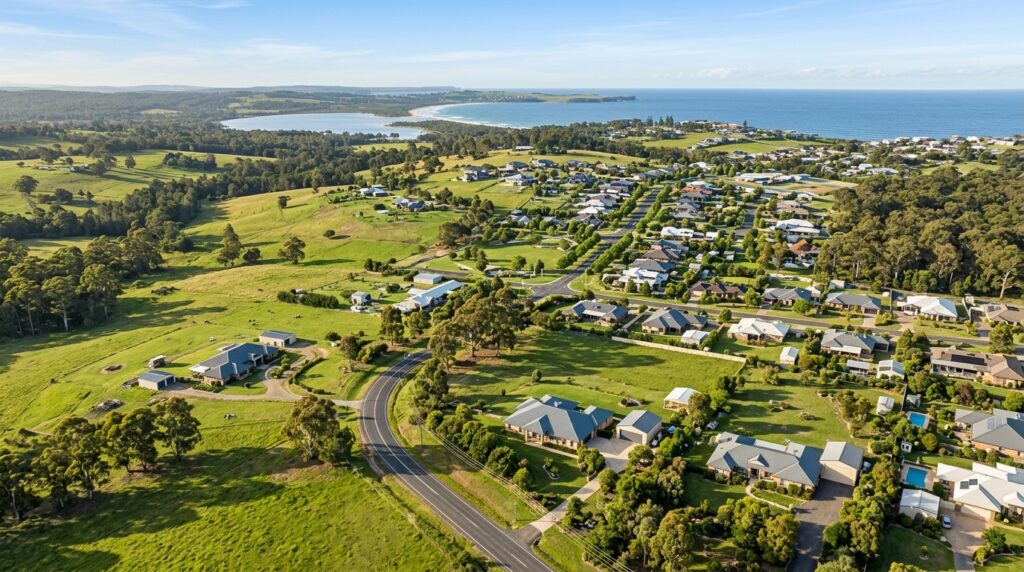
The sea change trend
Regional NSW has been attracting lifestyle buyers for years, and the trend has continued as remote work becomes mainstream. Buyers who once needed to live close to the CBD now have genuine flexibility about where they call home.
From the Snowy Mountains to the South Coast, properties are offering things city living cannot: space, natural surroundings and a slower pace. Cooma’s acreage estates deliver mountain views and privacy. The Yass River corridor offers productive rural land paired with character homesteads. Coastal towns like Long Beach and Wallaga Lake bring water access, solar-passive design and resort-style amenity.
Before you fall in love with a property, use a borrowing power calculator to understand your realistic budget. Rural lending rules can reduce the maximum loan amount for properties lenders consider non-standard.
Lifestyle property finance rules
Not every lender will fund a rural or lifestyle property, and those that do often apply tighter conditions. Here’s what shapes your borrowing options:
Lifestyle blocks vs working farms
Lenders treat lifestyle blocks and working farms very differently, and getting this distinction right matters for your application.
A lifestyle block is rural property used mainly for residential living. Think a homestead on a few hectares with hobby farming activity. Most major lenders accept these up to around 10-20 hectares, provided the zoning is rural residential and no commercial farming income is involved.
A working farm carries commercial activity such as livestock, crops or agricultural income. Lenders assess these as business lending, not standard home loans. The farm’s income becomes part of the servicing assessment, and specialist rural lenders are usually required.
A Yass River property recently featured in a regional property roundup sits on 20 hectares with stables, a sand arena and grazing paddocks. Whether it is treated as a lifestyle block or working farm depends on whether income is generated, and that changes your finance options significantly.
If you’re weighing up the investment potential of regional properties, read about positive cashflow properties in Australia to understand how investors assess regional returns.
Coastal and waterfront homes
Coastal and near-water properties come with their own lending checklist. Lenders look carefully at flood risk, insurance requirements and whether the property sits within a coastal erosion zone.
Upfront costs on lifestyle properties can be significant. Use a stamp duty calculator to work out what you’ll owe the state government before finalising your budget.
Getting finance-ready
Regional and lifestyle properties can move faster than you’d expect. Getting pre-approved before you start searching puts you in a much stronger position when you find the right one.
Common questions
Q: Can I get a standard home loan for a rural property?
It depends on the property size, zoning and location. Properties up to 10 hectares with rural residential zoning are accepted by most major banks. Larger acreage, primary production zoning or remote locations typically require specialist rural lenders with different criteria.
Q: How much deposit do I need for a lifestyle property in NSW?
Most lenders require at least 20-30% for rural and lifestyle properties, compared with 10-20% for standard suburban homes. The higher requirement reflects the lower LVR lenders apply to properties they consider harder to resell. A larger deposit also helps you avoid paying LMI.
Q: Can rental income from a second dwelling on a rural property help my application?
Some lenders will consider rental income from a self-contained studio or granny flat when calculating your borrowing capacity. The income must be verifiable via a lease or rental appraisal, and not all lenders include it. A broker can identify which lenders take the most flexible approach for your situation.