



How rural and lifestyle property owners can earn passive income by protecting native vegetation
Buying rural or lifestyle property in Australia often means acquiring land with native vegetation. For many buyers, this comes with land management obligations. But there is a lesser-known opportunity here too: biodiversity credits.
State and federal offset schemes allow landowners to earn income by protecting and improving the native habitat on their property. Those credits are then sold to developers and other landowners who need to offset vegetation clearing elsewhere. Here is what you need to know as a current or prospective rural property owner.
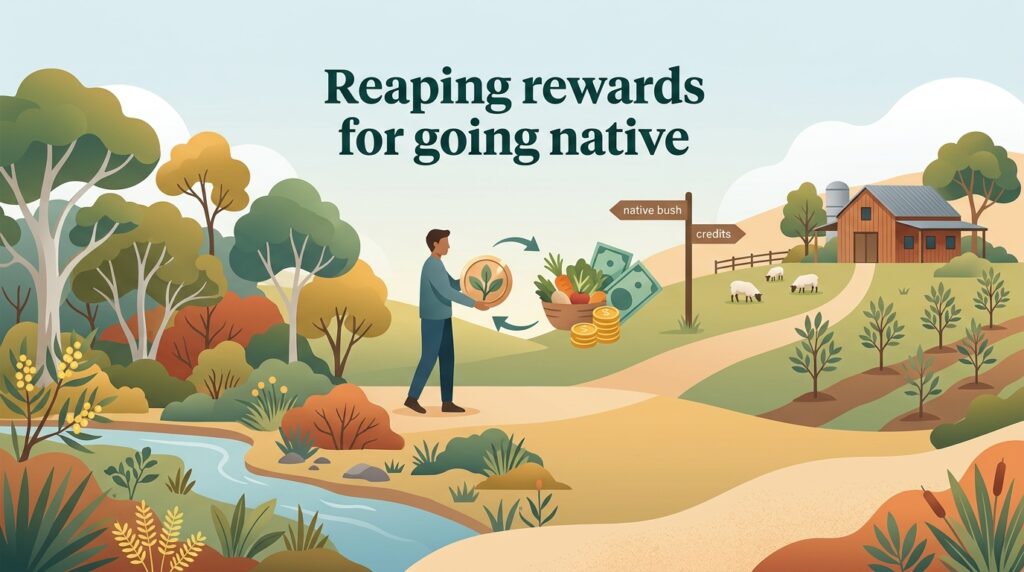
What are biodiversity credits?
Biodiversity credits are earned by landowners who agree to protect and manage the native habitat on their property in perpetuity. The credit value is determined by an accredited ecologist who assesses the biodiversity of the site.
Three main schemes operate in Australia: Victoria’s Native Vegetation Credit system, NSW’s Biodiversity Offsets Scheme, and programs administered through the federal government. All work on the same principle: protect the bush and earn tradeable credits.
Developers and landowners who need to clear native vegetation are required to offset that impact by purchasing credits from enrolled properties. This creates a market for conservation, where protecting land becomes financially rewarding rather than simply a compliance cost.
Who can participate
Until recently, large landowners such as farmers and mining companies generated most of the credits. But a growing number of individuals with smaller lifestyle and recreational properties are now joining the schemes.
You do not need a working commercial farm. A holiday property, weekender, or a block bought for recreational use can qualify, provided it contains native vegetation with assessable biodiversity value. An accredited ecologist determines whether the site meets the criteria.
Properties from around 40 hectares upward have been enrolled in Victoria, while NSW schemes accommodate a wide range of sizes. A key attraction of the schemes is flexibility: you can ring-fence a portion of your property for conservation while the rest remains available for farming, recreation, or normal personal use.
If you are considering buying rural land with native bush at the back of the block that is not being actively farmed or used, it may qualify. Understanding this potential before you purchase can change the return profile of a property that might otherwise look expensive to hold.
Income potential
Once your site is enrolled, biodiversity credits are sold through a broker and revenue is released to you gradually over time. This income funds your ongoing land management commitments and delivers a return from land that might otherwise generate nothing.
The income you earn depends on several factors: the biodiversity value of your site, demand for credits in your region, and the specific scheme you are enrolled in. Sites that support rare or threatened species tend to generate more valuable credits.
As conservation management improves a site over time, its biodiversity value increases. Native herbs and shrubs return, which in turn supports rare wildlife such as bandicoots and potoroos. This ongoing improvement raises the credit value of the site throughout its life.
For rural property owners exploring positive cashflow property opportunities, biodiversity credits offer a genuine income stream from land that might otherwise sit idle. Brokers describe the schemes as low-cost to set up but potentially high-income-generating depending on location and ecology.
Finance for rural buyers
If you are buying rural or lifestyle property with biodiversity potential, it is worth speaking to a broker experienced in lifestyle property finance. Rural and lifestyle lending operates differently to standard residential mortgages.
Lenders assess rural properties based on factors including block size, zoning, proximity to services, and whether a dwelling exists on the land. Fewer lenders are active in this space, which means rate and policy differences are significant. Getting the right lender for your property type makes a real difference to your borrowing costs.
Income from biodiversity credits is typically not counted as assessable income for loan serviceability purposes until it is established and documented. However, it strengthens the overall investment case for a property and is worth discussing with your broker when structuring your application.
Use our loan repayment calculator to estimate what repayments would look like on a rural property purchase at different loan amounts and rates.
How to get started
Setting up a biodiversity credit site involves a few straightforward steps.
Brokers encourage interested landowners not to be put off by the complexity of the schemes. Initial setup costs are low, the schemes are well-supported, and the process of protecting biodiversity while generating income is, as one landowner put it, “incredibly rewarding”.
Common questions
Q: Do I need a large farming property to join a biodiversity credit scheme?
No. Lifestyle and recreational properties with as little as 40 hectares of native vegetation can qualify. You can ring-fence part of your land for conservation while using the rest for farming or recreation as normal.
Q: Will joining a scheme restrict what I can do with my land?
The conservation agreement covers only the portion of land enrolled in the scheme. The rest of your property remains yours to use as you wish. The enrolled area must be managed to meet conservation standards, but this does not prevent normal use of the wider property.
Q: Can lenders count biodiversity credit income when assessing my loan?
Generally not until the income is established and documented over time. However, it can strengthen the investment case for a property. Speak to a mortgage broker about how to present rural income sources effectively in your loan application.