



What the global fuel crisis means for your home loan and household budget
The oil price crisis has moved from international headlines into Australian driveways and kitchens. Rising petrol and diesel prices are squeezing household budgets across the country, and for anyone holding or applying for a home loan in Australia, the impact is more significant than it might first appear. When living costs rise sharply and stay elevated, both lenders and borrowers need to reassess what is genuinely affordable. The oil price crisis and home loan serviceability are now directly connected.
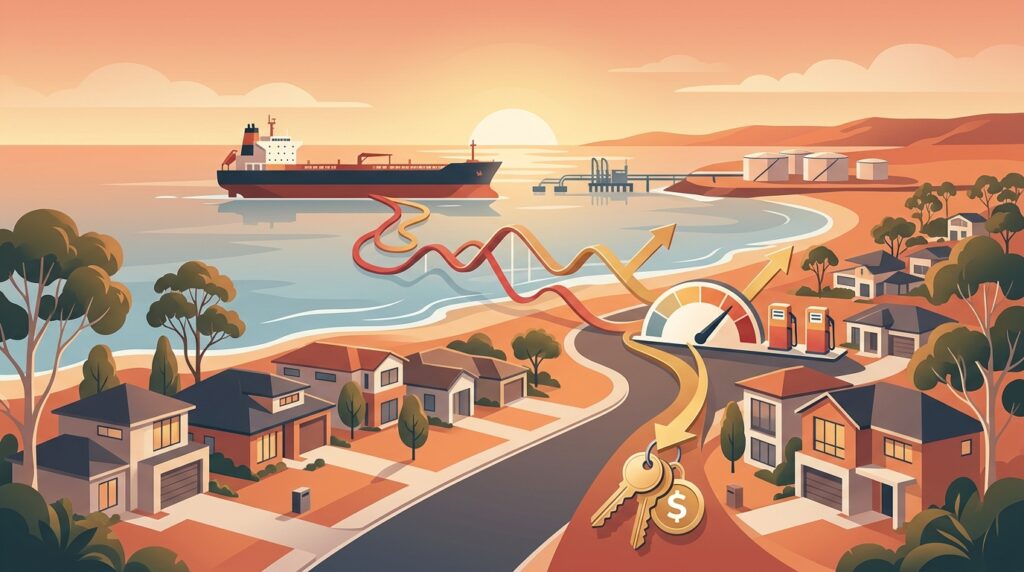
The crisis
The surge in Australian fuel prices traces back to disruption in the Middle East. US-Israeli military operations against Iran that began in late February 2026 effectively shut down shipping through the Strait of Hormuz, one of the world’s most critical oil transit routes. About 9 million barrels of oil per day, roughly 9 per cent of global supply, has been held up awaiting safe passage.
A ceasefire announcement in early April briefly caused the global benchmark oil price, Brent crude, to plunge by around $US20 a barrel. But that relief was short-lived. Further strikes in Lebanon led to the ceasefire stalling, and Brent has since climbed back above $US97 a barrel. Analysts from Westpac, CBA, and RBC Capital Markets have all warned that a return to pre-conflict conditions is months away at the earliest, even if hostilities end tomorrow.
Fuel prices now
The price impact at the bowser has been substantial. Unleaded petrol in major cities sits at around $2.25 a litre, well above pre-conflict levels despite being about 30 cents below the March peak. The harder hit has been diesel, which reached a record high of around $3.24 per litre in early April 2026, more than reversing the relief provided by the federal government’s temporary 26-cent fuel excise cut and the removal of GST on fuel.
For households with long commutes, families running two vehicles, or small business owners dependent on diesel, these prices add hundreds of dollars to monthly costs. That extra spending comes directly out of the money you would otherwise have available to save for a deposit or service a home loan repayment.
How long?
Experts are consistent: the road back to normal is a long one. Robert Rennie, head of commodity strategy at Westpac, says even if a stable ceasefire holds and the Strait of Hormuz reopens in a coordinated way, it will take months before shuttered oil wells restart, crews and vessels are repositioned, refineries are repaired, and fuel reaches the countries that need it most.
CBA commodity strategist Vivek Dhar estimates a six-to-twelve-month window just to normalise oil supply. For liquefied natural gas, the timeline is worse. Qatar’s Ras Laffan facility, the world’s largest gas liquefaction plant, has been offline since March and could remain sidelined for two to three years. If you want to understand why your financial position feels under more pressure than your income alone would suggest, this guide to declining borrowing power explains the broader forces at work.
Home loan impact
The oil price crisis and home loan assessments are more connected than many borrowers realise. When lenders calculate whether you can service a loan, they consider your income, your existing debts, and your living expenses. Fuel costs form part of that living expense calculation. Lenders use benchmarks like the Household Expenditure Measure, known as HEM, to estimate minimum living costs, and these benchmarks are periodically updated to reflect actual conditions in the economy.
If fuel prices remain elevated for six to twelve months or more, lenders may tighten their serviceability assessments accordingly. Some borrowers who qualified for a larger loan six months ago may find their borrowing capacity has changed. To get an updated picture of what you can borrow under current conditions, use our borrowing power calculator.
What to do now
If you are currently applying for a home loan or planning to apply in the next six to twelve months, the fuel crisis is worth building into your planning. A few practical steps can help.
First, review your household budget with current fuel costs baked in, not the pre-crisis numbers from last year. If your budget is stretched at today’s prices, a lender will see that pattern in your bank statements. Second, reduce other variable expenses where you can to strengthen your net savings before you apply. Third, if you drive a long way to work, consider whether a property closer to employment centres or public transport would meaningfully reduce your ongoing fuel exposure. Use our loan repayment calculator to model what different loan amounts would cost you each month at current rates.
Budget and rates outlook
The federal government’s May 2026 budget is expected to include additional cost-of-living support for households and businesses affected by the fuel crisis. Treasurer Jim Chalmers has acknowledged that the economic consequences of the Middle East conflict will be felt for some time. What form budget support takes, and how quickly it flows through to everyday Australians, remains to be confirmed.
Some economists expect the RBA to factor elevated living costs into its interest rate decisions in the months ahead. If rates ease, that would partially offset the pressure on household budgets. Our guide to how RBA rate cuts affect your borrowing power explains exactly how much difference a rate change makes to what you can borrow and what you repay each month, which is useful context for planning ahead in a volatile cost environment.
Common questions
Q: Will the fuel crisis affect my ability to get a home loan?
It can, indirectly. Lenders look at your living expenses when they assess your loan application. If your fuel costs have risen significantly and your income has not kept pace, your net financial position may look weaker to a lender. Bank statements showing higher petrol and diesel spending could affect how a lender views your serviceability. Reviewing your budget and reducing other variable costs before you apply is a practical response.
Q: How long will Australian petrol and diesel prices stay high?
Experts from CBA, Westpac, and RBC Capital Markets all indicate it will take six to twelve months to normalise oil supply, even if the Middle East ceasefire holds. Australia’s LNG situation may take considerably longer to resolve. Government measures including the temporary fuel excise reduction and potential budget support may provide some relief but are unlikely to return prices to pre-crisis levels quickly.
Q: Should I delay buying a home until fuel prices come down?
Market timing is rarely reliable as a strategy. While high fuel costs are a pressure point, property prices and buyer competition do not necessarily pause for macroeconomic headwinds. A better approach is to understand your current borrowing capacity, factor realistic living costs into your budget, and buy when the property and the numbers work for your situation. A good mortgage broker can help you model different scenarios before you commit.