



How Australia's property boom started to cool in December 2021.
The property market December 2021 data confirmed a year of extraordinary growth was winding down. National housing values rose 1% in December, stepping back from November’s 1.3% gain. But even as Sydney and Melbourne slowed, regional markets and other capitals kept pushing ahead.
Australia closed the year with an estimated 653,000 house and unit settlements. That is the highest annual sales count on record, underlining just how active the market was throughout 2021.
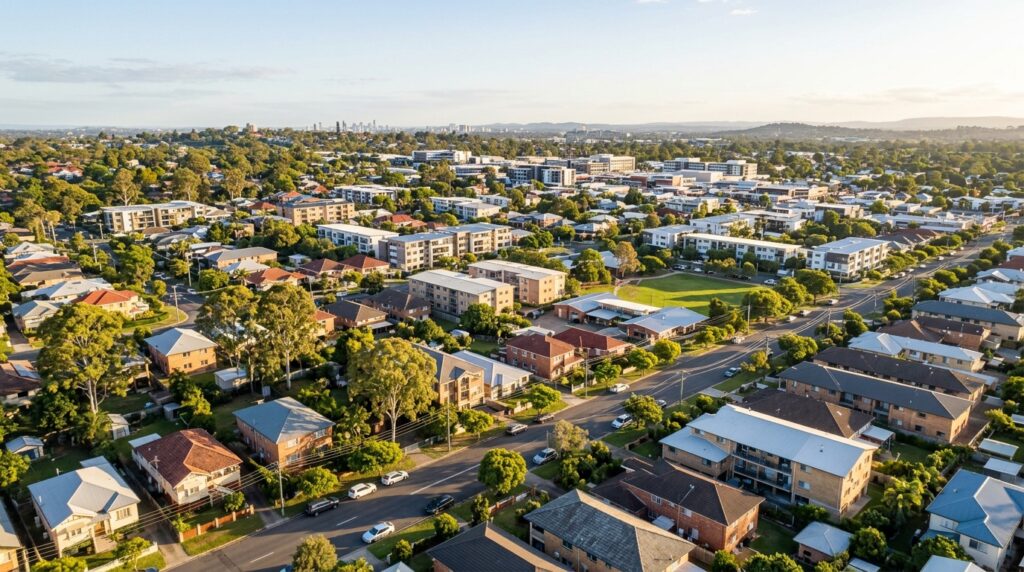
December snapshot
National values rose 1% for the month. The upper quartile of the market, the most expensive properties, led the slowdown. Across the capitals, upper-quartile values rose 2.6% over the quarter, compared with 3.7% for the lower and middle segments.
Gross rental yields fell to a record low of 3.2% nationally. Every capital city except Perth and Darwin recorded all-time low yields. Sydney dropped to 2.4% and Melbourne to 2.7%.
New listings were 21.4% above the five-year average in December. That extra supply gave buyers more properties to choose from and reduced urgency in negotiations. The average time on market began to lengthen.
Why growth slowed
Two forces shaped the slowdown in Sydney and Melbourne. First, affordability became a real barrier. Prices had grown faster than wages for most of 2021, making it harder to save a deposit or qualify for a larger home loan.
Second, vendor confidence was high. More homeowners chose to list their properties, which boosted supply and gave buyers more choice and time to decide. Auction urgency faded and the average days on market lengthened.
APRA also tightened lending conditions in October 2021, lifting the serviceability buffer from 2.5% to 3%. This directly reduced your borrowing power, meaning buyers could not borrow as much as they could earlier in the year.
Regional markets led
While the capitals slowed, regional Australia accelerated. Regional values climbed 6.4% in the three months to December, up from 5.1% in the September quarter. Since March 2020, regional values had gained 32%, compared with 20% for the combined capitals.
Brisbane, Adelaide and regional Queensland showed no signs of cooling. Lower relative affordability pressures and strong interstate migration kept demand firm. The Southern Highlands and Shoalhaven posted annual gains of 37.7%, while Sunshine Coast rose 33.7%.
Remote work had permanently shifted demand toward lifestyle areas. Buyers were willing to move further from CBDs, which kept regional markets well supported even as city markets softened.
Record year of sales
2021 was a record year for property transactions. CoreLogic estimated 653,000 house and unit settlements over the calendar year. That is the highest number of annual sales ever recorded in Australia.
Buyers were supported by low interest rates and, for many, the financial buffer that came from reduced spending during lockdowns. First home buyer activity initially held up but fell 11% through the year as rising prices made deposits harder to accumulate.
Investors returned steadily. Rental demand was strong in most cities outside Sydney and Melbourne, where vacancy rates had stayed elevated. Gross rental yields were at record lows, but capital growth more than compensated for investors focused on long-term returns.
2022 bank forecasts
All four major banks predicted continued price growth for 2022, just at a slower pace. Westpac was the most optimistic at 8%, followed by CBA at 7%, ANZ at 6% and NAB at 4.9%. Most also forecast a price correction in 2023 as interest rates began to rise.
Investors were expected to return strongly once international borders reopened. Students and skilled workers would lift demand for apartments, helping rental yields recover from record lows. For a broader look at the road ahead, see our property market predictions for 2022 and 2023.
Supply-chain pressures also pushed up building costs. Raw material shortages raised the price of new home construction, adding further upward pressure on values for existing properties. Buyers considering a new build needed to account for longer timelines and higher costs.
Should you buy?
There is no perfect time to enter the property market. Prices rarely follow a predictable path, and waiting for a fall that may not arrive can cost you more than acting in a rising market.
If your income is stable and you have a clear sense of your budget, buying sooner generally makes more financial sense. A broker can walk through your borrowing capacity and help you get pre-approved before competition picks up again.
For existing homeowners, the strong gains of 2021 may have built useful equity. Whether you want to invest, upgrade or consolidate debt, check out what the property market did in January 2022 to see how momentum shifted as the new year began.
Common questions
Q: Did property prices fall in December 2021?
No. National housing values rose 1% in December 2021, which was slower than November’s 1.3% gain but still positive. Sydney and Melbourne saw their softest monthly growth since October 2020, but no capital city recorded a monthly fall.
Q: Which areas grew fastest at the end of 2021?
Regional markets outperformed the capitals. The Southern Highlands and Shoalhaven recorded the strongest annual growth at 37.7%, followed by Sunshine Coast at 33.7%. Brisbane and Adelaide also continued to grow strongly in December 2021.
Q: What did the major banks predict for house prices in 2022?
All four big banks forecast further growth. Westpac predicted 8%, CBA forecast 7%, ANZ predicted 6% and NAB forecast 4.9%. Most banks also predicted a price correction or slowdown in 2023 as interest rates started to rise.