



Save a Deposit or Pay Off Debts First? A Clear Guide
- April 8, 2026
- Posted by: Serres Property Finance
- Category: Guides
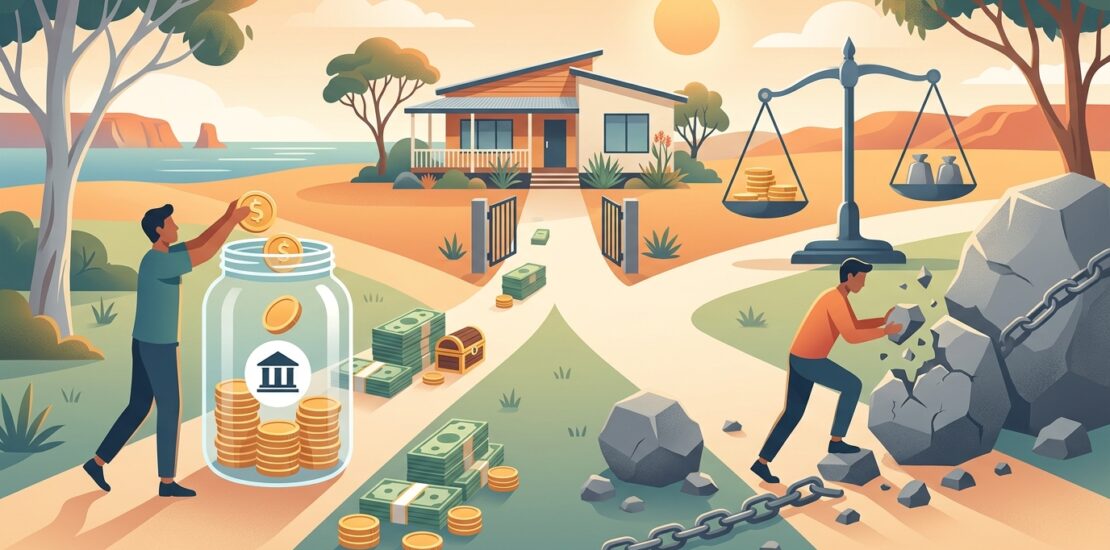
Sort out your finances and get into your first home sooner.
One of the most common questions first-home buyers face is this: should you save a deposit or pay off debts first? The honest answer is that it depends on your situation. The right move for you comes down to how much debt you carry and how much you have already saved.
This guide walks you through a practical step-by-step approach so you can figure out the best path for your finances and get moving toward your first home.
Could you buy now?
Before you spend months paying down debt or building savings, it is worth checking whether you could actually buy a home right now. It sounds surprising, but it is possible.
The best option for many buyers with little or no deposit is a guarantor home loan. With a parent or close family member acting as guarantor, you can borrow the full purchase price, cover stamp duty costs and even consolidate some debts into the loan. You also get a sharper interest rate and avoid paying Lenders Mortgage Insurance. If that option is available to you, it is worth exploring before you go through months of debt reduction or saving.
Not everyone has family in a position to help. If that is your situation, read on.
Find your roadblock
Banks have a number of boxes to tick before approving a home loan. The most common blockers for first-home buyers are a small deposit, too much debt, or both at the same time. Identifying which one is holding you back tells you where to put your energy.
Here is a simple rule of thumb. Add up all your unsecured debts: credit cards, personal loans and car loans. Leave out your HECS-HELP debt for now, as banks assess that differently. Then compare the total to 5% of the property price you are aiming to buy.
This threshold is a guide, not a hard rule. But it gives you a clear starting point for prioritising your efforts.
Pay debts first
If your debts are above the 5% threshold, that is where your focus needs to go. Here is how to make real progress:
Once your unsecured debts drop below 5% of your target purchase price, you are ready to shift focus to saving your deposit.
Build your deposit
Your goal is a minimum deposit of 5% of the purchase price, though 10% or more will open up more lender options and help you avoid Lenders Mortgage Insurance.
Open a dedicated high-interest savings account and set up automatic transfers from your pay each fortnight. This approach serves two purposes: it builds your balance faster, and it creates a savings history that lenders want to see. Banks call this genuine savings, and it is one of the factors they assess when reviewing your application.
Use our borrowing power calculator to get a realistic figure for how much you could borrow, then work backwards to set your savings target. Knowing your number makes the goal feel real and achievable.
If your state government offers a First Home Owner Grant or stamp duty concession for new properties, you may be able to buy a little earlier than you think. Ask us about what is available in your state.
Clear the other hurdles
Deposit and debt are the two biggest obstacles, but they are not the only ones. Before you apply for a home loan, it is worth checking a few other things:
If you are wondering whether you are ready to buy your first home, a conversation with one of our brokers can give you a clear picture of where you stand and exactly what you need to do next. We can assess your full situation before you apply.
Common questions
Q: Does HECS-HELP debt count when deciding whether to save or pay debts first?
Not for this calculation. HECS-HELP is assessed differently by lenders because it is repaid through the tax system based on income, not as a fixed monthly commitment. Leave it out when you are comparing your debt total to the 5% threshold. Your broker can show you exactly how your HECS repayment affects your borrowing capacity.
Q: How long does genuine savings history need to be?
Most lenders want to see at least three months of regular savings in your account. Some will accept six months for more flexibility with the deposit amount. The key is showing a consistent pattern of adding to your savings, not just a lump sum sitting in an account. Keeping your savings separate from your everyday account makes it easier to demonstrate this history.
Q: Can I roll my debts into my home loan when I buy?
In some cases, yes. A guarantor loan can allow you to consolidate a small amount of debt into the new home loan. Outside of a guarantor arrangement, most lenders will not let you add personal debts to a purchase loan. Paying them off first is generally the cleaner path to approval.