



The property market September 2020 decline was the smallest in five months, and a lot of cities were already moving in the right direction.
September 2020 was the fifth month in a row that national dwelling values fell, but the story this time was noticeably different. The rate of decline had slowed to just 0.1%, the softest monthly result since May. Six of Australia’s eight capital cities actually recorded rising values, with only Sydney and Melbourne dragging the national figure into negative territory. If you’re watching the market and thinking about your next move, now is a good time to understand your borrowing power before conditions shift further.
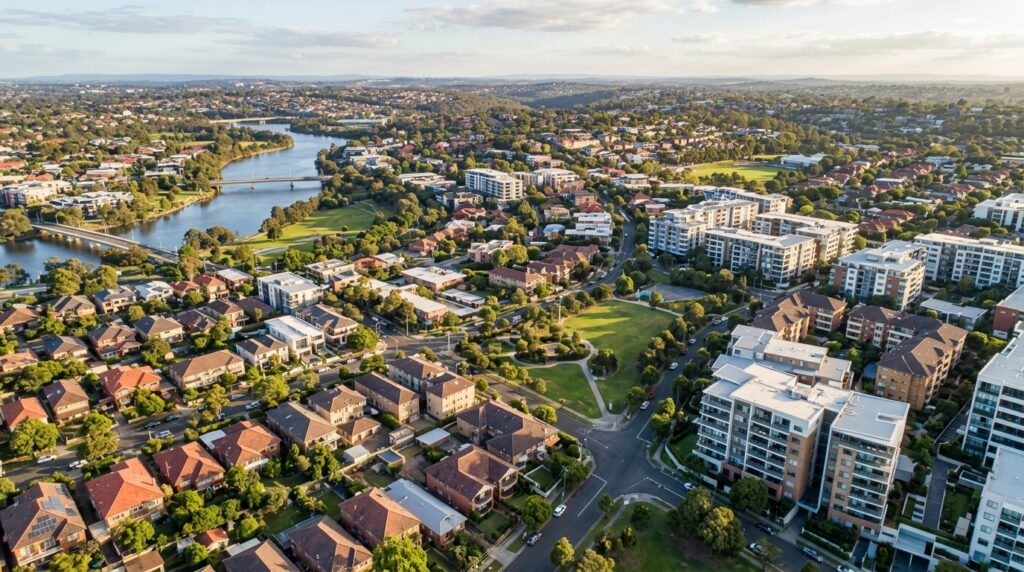
September snapshot
National dwelling values dropped 0.1% in September 2020, the smallest monthly decline recorded since May. It was the fifth consecutive month of falls, but the trend was clearly pointing toward stabilisation.
Six of the eight capital cities posted positive results for the month. Brisbane, Adelaide, Perth, Hobart, Darwin, and Canberra all recorded modest gains. Only Sydney, which fell 0.3%, and Melbourne, which dropped 0.9%, pulled the national figure into the red.
The new listings flowing onto the market were being absorbed well. Distressed sales remained lower than many had expected, and auction clearance rates across the combined capital cities were sitting at around 60% for the month. That’s a reasonable clearance rate for a market navigating the uncertainty of a pandemic year.
At the price end of the market, affordable properties in the bottom 25% fell 0.4% while premium properties in the top 25% dropped 2.6%. The higher end of the market remained under more pressure, which made sense given that high-value buyers tend to be more cautious when economic confidence is uncertain.
Sydney and Melbourne
Sydney and Melbourne were the only two capital cities to record falls in September, though the picture for each city carried some nuance.
Sydney slipped 0.3% for the month. That was a modest decline by any measure, and importantly the rate of falls in Sydney had been easing over recent months. The market there was showing signs of finding a floor, with buyer activity holding up reasonably well relative to the uncertainty hanging over the broader economy.
Melbourne told a more difficult story. The city fell 0.9% in September and was down 5.5% from its peak in March 2020. Melbourne had been carrying the weight of a prolonged second wave of COVID-19, with extended stay-at-home orders limiting economic activity and freezing the real estate market for much of the second half of the year.
The good news by late September was that restrictions were beginning to ease. Private property inspections were resuming, which opened the door for buyers who had been sitting on the sidelines. Sentiment in Melbourne was cautious but improving, and real estate agents were reporting growing interest from buyers who had been waiting for restrictions to lift before committing to inspections or offers.
Regional resilience
One of the clearest trends to emerge through 2020 was how well regional property markets held up compared to the capital cities. By September, combined regional home values had slipped just 0.8% from their March peak. Combined capital city values had fallen 2.6% over the same period. That’s a significant gap, and it reflected real structural shifts in how and where people wanted to live.
Several factors drove demand in regional areas throughout this period. First, regional properties generally started from a more affordable price point, which gave buyers more room to act even when confidence was fragile. Second, the rapid uptake of remote working arrangements meant that proximity to the office became far less important for a large number of workers. People who would previously have needed to live within commuting distance of a capital city CBD suddenly had far more flexibility about where they chose to base themselves.
Third, the pandemic had shifted preferences toward lower-density living. Detached houses with outdoor space became far more appealing than apartments in dense inner-city suburbs. Many buyers found they could get more for their money in regional centres or in towns located within reasonable distance of a capital city, close enough for occasional travel in but far enough to enjoy space and affordability.
These were the same themes that had been building through the middle of the year. For more context on how conditions looked a couple of months earlier, see our July 2020 property market update.
Budget for buyers
The October 2020 Federal Budget, handed down shortly after the September data, included several measures that were relevant to property buyers.
The government announced 10,000 additional places under the First Home Loan Deposit Scheme, specifically through a new First Home Loan Deposit Scheme New Home Guarantee. This version was targeted at buyers purchasing or building a new home rather than an established property. As with the original scheme, eligible buyers could purchase with as little as a 5% deposit without paying lenders mortgage insurance, with the government guaranteeing the difference.
The Budget also included $1 billion in funding directed toward affordable housing, a measure aimed at maintaining supply at the lower end of the market. On top of that, the government committed over $10 billion to infrastructure investment across the country. Large-scale infrastructure spending typically benefits property markets in and around the areas being developed, as improved transport links and facilities make locations more attractive to buyers and renters over time.
For first home buyers in particular, the combination of government scheme places and the softer market conditions through much of 2020 created a window that hadn’t existed for some time.
Is it time to buy?
For buyers who had been watching from the sidelines, September 2020 offered a few reasons to take a closer look at what was available.
Values in several cities remained below their pre-COVID peaks, particularly in Melbourne and Sydney. That meant buyers entering the market during this period were doing so at lower prices than they would have faced earlier in the year. At the same time, competition from other buyers was softer than usual. Auction clearance rates of around 60% suggested that sellers weren’t fielding aggressive bidding wars, which gave buyers more room to negotiate.
Government support was also more accessible than it had been for years. Between the First Home Loan Deposit Scheme, the HomeBuilder grant, and state-based first home owner grants, eligible buyers had meaningful financial assistance to help reduce the upfront cost of getting into the market.
The key for any buyer is understanding what the numbers actually mean for your situation. Knowing the market moved in a particular direction is useful, but knowing how much you can borrow and what repayments would look like for a property you’re considering is what lets you act with confidence. Take a few minutes to estimate your monthly repayments and see what buying in the current market could mean for your budget.
Common questions
Q: Why did Melbourne and Sydney fall more than other cities in September 2020?
Melbourne was still working through the effects of a prolonged second COVID-19 wave that had kept the city in strict lockdown for much of mid-2020. That restricted economic activity, limited inspections, and knocked buyer confidence harder than anywhere else in the country. Sydney’s fall was much smaller at 0.3%, reflecting a market that was softening but not collapsing. Both cities carry a higher proportion of investment properties and premium stock compared to smaller capitals, and those segments tend to be more sensitive to economic uncertainty. The other six capitals were in a better position because they had avoided the extended lockdowns and generally had tighter housing supply relative to demand.
Q: Why did regional markets hold up better during 2020?
Regional areas benefited from a combination of factors that came together in a fairly unusual way during 2020. The widespread shift to remote work meant that buyers no longer needed to live near a CBD, which opened up regional towns and coastal areas to a much larger pool of potential buyers. At the same time, many buyers were actively looking for more space and lower-density living arrangements, which regional properties offered at a fraction of the price of comparable capital city homes. Areas located within a few hours of a major capital proved especially popular, offering lifestyle benefits while still keeping people connected to the city when needed. That genuine shift in buyer preference is what drove regional values to outperform capitals by such a wide margin through this period.
Q: What does the First Home Loan Deposit Scheme mean for buyers?
The First Home Loan Deposit Scheme allows eligible first home buyers to purchase with a deposit as small as 5% without having to pay lenders mortgage insurance. Normally, a deposit below 20% triggers an LMI premium that can add thousands to the cost of buying. Under the scheme, the federal government guarantees the difference, which removes that cost entirely for eligible buyers. The New Home Guarantee announced in the October 2020 Budget extended this to buyers building or purchasing a newly built home, with 10,000 additional places made available. The scheme has income and property price caps that vary by location, so it’s worth checking the eligibility criteria for your specific situation before you apply.