



A Scottish private island just listed for $1.75m. Here's what remote property buyers need to know.
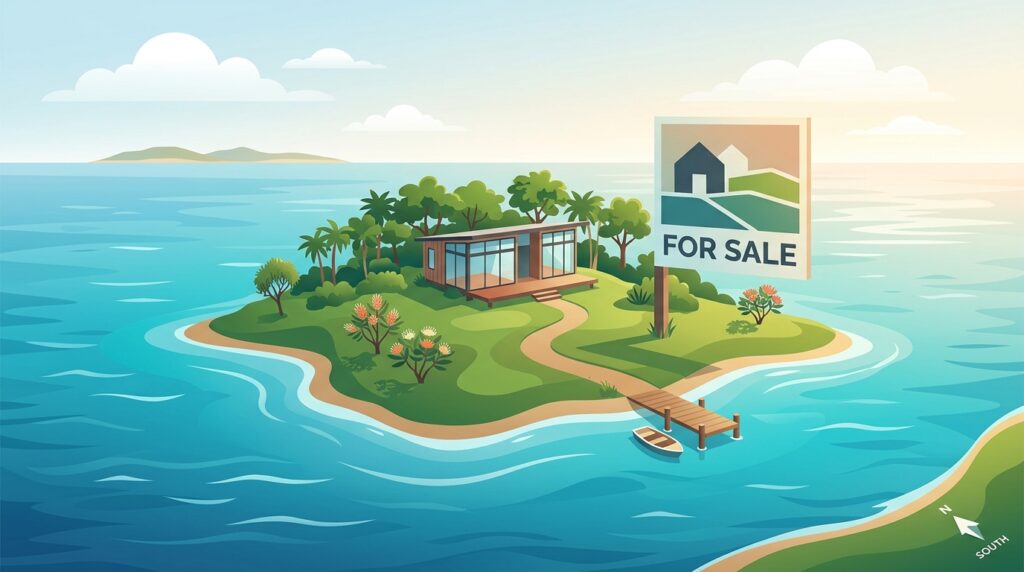
A two-bedroom stone home on a remote Scottish island has just listed for $1.75 million. No neighbours. Accessible only by boat. The entire 6,256-hectare island is included in the sale. For most people it’s a fantasy, but plenty of Australians do buy unusual and hard-to-access properties. Whether it’s a rural retreat with no sealed road, a waterfront property on a Queensland island, or a remote acreage block, unusual properties are a real market in Australia. And when it comes to getting a home loan for a private island property or any non-standard home, the lending rules are quite different.
The listing
The Island of Soay, located off the Isle of Skye in Scotland, has just been listed by agents Land and Estate for £925,000, which converts to roughly $1.75 million AUD. The two-bedroom stone home sits on over 6,000 hectares of island, featuring freshwater lochs, red deer, Soay sheep, and dramatic views of Scotland’s Black Cuillin mountains.
The home has been empty since its last owner, shark hunter Tex Geddes, passed away in 1998. Agents say it will need significant renovation and photos of the interior were not included in the listing. Access is by boat from the village of Elgol only, with no road connecting it to the mainland. For the right buyer it offers total privacy. For most buyers, it raises a practical question: what does financing a remote or unusual property actually look like?
Non-standard security
In lending terms, a property is classified as non-standard security when it falls outside the usual criteria for a mainstream home loan. Common examples include properties with no sealed road access, island properties accessible only by boat, homes with unusual construction materials, off-grid properties with no town water or sewer, and very remote locations where comparable sales are rare.
Australia has plenty of properties that fit this description. You can read more about how unconventional building materials affect home loan approvals to understand how lenders think about unusual property types, and the same cautious approach applies to remote access and unusual location.
When a lender classifies a property as non-standard, the result is usually one of three things: a lower maximum LVR than usual, a smaller panel of lenders willing to consider it, or an outright decline. Understanding this early means you can plan your deposit and your property search before you get attached to a specific property.
LVR and deposit
For a standard residential purchase, you may be able to borrow up to 95% of the property value with lenders mortgage insurance covering the gap. For remote or non-standard properties, lenders typically reduce the maximum LVR significantly. Rural and remote properties are often capped at 80% LVR. Properties with very limited comparable sales, unusual access, or unique characteristics can attract caps of 70% or even lower.
This directly affects how much deposit you need. On a $1.5 million property, an 80% LVR cap means a $300,000 deposit before costs. At 70% LVR, that becomes $450,000. Before you fall in love with an unusual property, it pays to check how much you can actually borrow. Our borrowing power calculator is a good starting point for understanding your numbers.
It is also worth noting that lenders mortgage insurance is usually unavailable for non-standard properties. This removes a tool that first home buyers and lower-deposit purchasers often rely on. If you are buying in this space, you almost certainly need a genuine 20-30% deposit plus purchase costs.
Valuations and comps
Every lender requires a formal property valuation before approving a home loan. The valuer’s job is to determine market value, and they do this primarily by finding recent comparable sales nearby. For unique or remote properties, this is where things get complicated.
If a valuer cannot find comparable sales, they may either return a conservative valuation below the purchase price, or flag the property as difficult to value. A conservative valuation means the lender will base your loan amount on the lower figure, not the price you agreed to pay. If there is a significant gap, you need to cover that difference in cash.
Getting an independent valuation before you make an offer or sign a contract is one of the smartest things you can do when buying an unusual property. It gives you a realistic picture of what the bank is likely to say, and it surfaces issues early while you still have time to walk away or negotiate.
Remote property finance
Not all lenders treat unusual properties the same way. Some specialist lenders and non-bank lenders have more flexible policies when it comes to rural land, remote acreage, and unusual construction. A mortgage broker with experience in this space can match you with a lender whose policy suits the property you are looking at. Our guide to financing unique properties in Australia gives a broader overview of how non-standard property types get approved.
For remote properties specifically, lenders often ask for extra documentation beyond the standard income and savings evidence. This typically includes details on road and utility access, information on how the property is connected to power and water, evidence that the property can be insured, and in some cases a pest and building inspection.
Insurance availability is particularly important. If a property cannot be covered by a standard home and contents policy, many lenders will not proceed. Very remote properties sometimes fall into this category. Some specialist insurers offer rural or remote property coverage, and confirming insurance availability before you apply for finance removes a potential roadblock later in the process.
If you are buying in a remote location, speak with a broker before you start inspecting properties. Understanding what is and is not financeable in your target area saves a great deal of time and potential disappointment.
Common questions
Q: Can you get a home loan for an island or remote property in Australia?
Yes, but your options are more limited than with a standard residential property. Many mainstream lenders restrict lending on remote, boat-access or island properties. A specialist mortgage broker can identify lenders with suitable policies and help structure the application to improve your chances of approval.
Q: How much deposit do I need for an unusual or remote property?
Most lenders apply a reduced LVR to non-standard properties, typically capped at 70-80%. This means you will usually need a 20-30% deposit plus purchase costs. For properties with very few comparable sales or highly unusual characteristics, the deposit requirement can be higher. Speaking with a broker early gives you an accurate picture before you commit to a purchase.
Q: What makes a property non-standard in the eyes of a lender?
Common triggers include no sealed road access, boat-only access, island location, unusual construction materials, off-grid utilities, and locations where comparable sales are very difficult to find. Your lender or broker can assess whether a specific property meets their standard policy criteria before you proceed.