



Character, space and history — but financing one takes the right approach.
A warehouse conversion home loan is something many buyers don’t think about until they’ve already fallen in love with a property. Converted warehouses and loft-style apartments are appealing for good reasons: high ceilings, open plan living, inner-city locations, and a sense of character that new builds simply cannot replicate. But lenders can be cautious with these properties, and securing finance requires understanding why that is and how to navigate it. Use our borrowing power calculator to get a starting point before you begin your search.
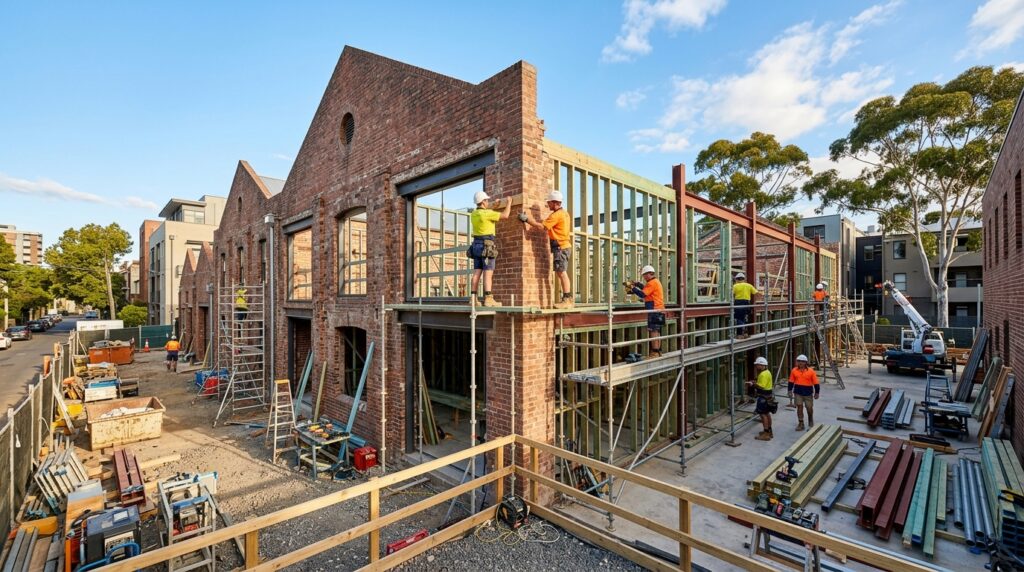
What is a warehouse conversion?
A warehouse conversion is a residential dwelling created by repurposing an old warehouse, factory, or similar industrial building. Developers and investors convert these spaces into apartments or loft-style homes, typically retaining features like exposed beams, brick walls, large windows, and concrete floors that give the property its distinctive character.
They are different from conventional apartments in several ways. The open plan design, high ceilings, and minimal internal walls create a very different living experience. Many are located in inner-city precincts close to the CBD and public transport, in areas that have undergone gentrification as industrial use has declined.
You can find warehouse conversions in cities across Australia. In Sydney, well-known examples exist in Pyrmont, Woolloomooloo, and Randwick. In Melbourne, Richmond, Fitzroy, Flinders Lane, and Port Melbourne are popular precincts. Perth has examples in Fremantle, Northbridge, and Margaret River.
Pros and cons
Before you commit to buying, it pays to weigh up the advantages and disadvantages honestly.
Benefits of a warehouse conversion:
Drawbacks to consider:
Warehouse conversion finance
Getting a warehouse conversion home loan approved is achievable, but it does require working with the right lender. Most mainstream banks are cautious with these properties because they can be located in areas with limited comparable sales, have unusual characteristics that make valuation harder, or sit in buildings with a high number of units.
Lenders generally find it easier to approve finance when the conversion is already completed. Off-the-plan loans, where the value is based on plans and projected figures, carry more risk and tend to attract stricter lending conditions.
Key factors that affect your chances of approval:
Tips for buyers
Buying a warehouse conversion successfully comes down to doing your homework upfront:
Common questions
Q: Why are warehouse conversion home loans harder to get approved?
Lenders assess risk based on how easy it would be to sell the property if the borrower defaulted. Warehouse conversions appeal to a narrower pool of buyers, can be in less conventional locations, and may have valuation challenges due to limited comparable sales. That uncertainty makes some lenders cautious, though specialist lenders and brokers with access to a wide panel can often find a solution.
Q: Do I need a larger deposit to buy a warehouse conversion?
In many cases, yes. Lenders offering lower deposit loans on standard properties may require a larger deposit for unusual property types. A deposit of 20% or more removes the need for lenders mortgage insurance and gives you access to a broader range of lenders. If you have a smaller deposit, speaking with a broker before you start your property search is advisable.
Q: Can a warehouse conversion be used as an investment property?
Yes, but check the zoning and building classification carefully. Some conversions have restrictions on short-term rental or specific use types. Rental demand in the area matters too. Inner-city locations generally perform well for rentals, but properties in fringe industrial areas can struggle with vacancy.