



Your dream home, whatever it's made of
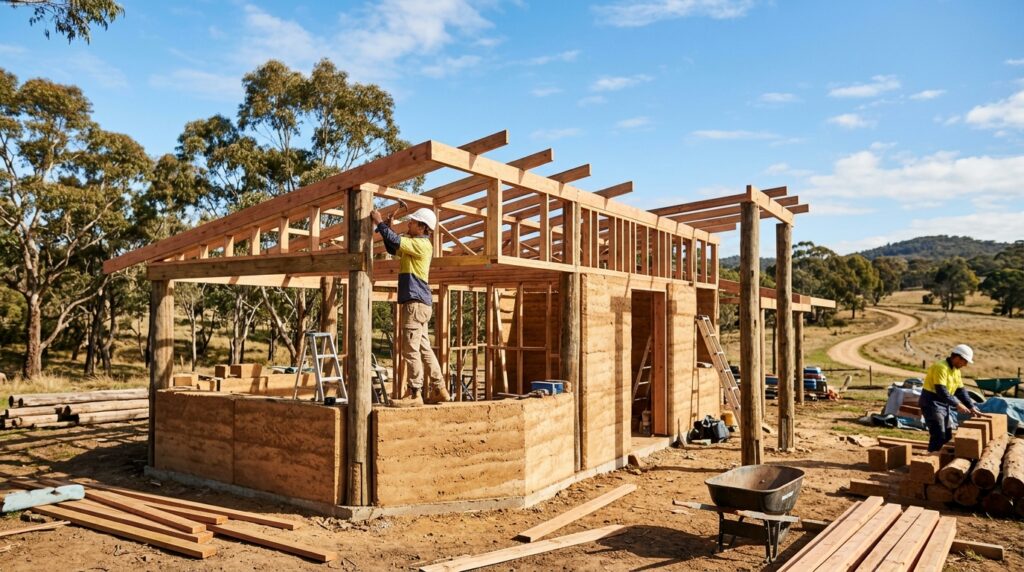
An unconventional building materials home loan is possible in Australia, but you need to know how lenders think about these properties. Homes built from mudbrick, strawbale, rammed earth, timber log, or other non-standard materials are considered harder to sell than conventional brick or weatherboard homes. As a result, most lenders cap borrowing at a maximum of 80% loan-to-value ratio (LVR). That means you need at least a 20% deposit. The good news is that with the right broker, finance is achievable.
Why lenders are cautious
Lenders are in the business of managing risk. When they take security over a property, they need confidence that the home could be sold quickly if something goes wrong. Unconventional properties appeal to a narrower pool of buyers, which means they can take longer to sell and may attract lower prices at auction.
Because of this limited resale market, most lenders are not comfortable lending more than 80% of the property’s value. Some lenders will not accept these properties as security at all. Fewer lenders competing for your business can also mean less competitive rates.
Understanding why your application might face hurdles is the first step to navigating them. Our guide to common reasons home loans are declined covers some of the risk factors lenders assess during the approval process.
What counts as unconventional
A home is considered to have unconventional building materials when it is not constructed from brick, weatherboard or fibrous cement. To be classified as eco-friendly, a material must also meet certain criteria: it should be produced without significant pollution or energy waste, it must be readily available and sustainable, and it should offer good insulation and longevity.
Timber is an example of a sustainable material when sourced from managed forests where replanting is ongoing. Materials with better insulation reduce energy use, and longer-lasting materials make for a better investment over time.
Unconventional homes in Australia typically include:
How LVR limits work
LVR stands for loan-to-value ratio. It describes how much you are borrowing compared to the value of the property. A standard home loan might allow up to 95% LVR with Lenders Mortgage Insurance, but for unconventional properties the cap is generally 80% LVR.
This means if you want to buy a strawbale home valued at $600,000, you would need a minimum deposit of $120,000. You generally cannot add LMI to push above 80% on these property types, because most lenders will not offer LMI cover for non-standard construction.
Knowing your deposit size and borrowing capacity before you start is essential. Use our borrowing power calculator to get a clear picture of what you might be able to borrow given your income and financial position.
How to get approved
The key to financing an unconventional home is working with a mortgage broker who knows which lenders will accept the property type. Not all lenders publish their policies on non-standard construction, and policies vary significantly between banks and non-bank lenders.
Here are some steps that improve your chances:
If you are also considering other non-standard property types, our guide to financing a warehouse conversion covers similar territory for industrial-to-residential conversions.
Common questions
Q: Can I borrow more than 80% LVR for a mudbrick or strawbale home?
In most cases, no. Most lenders cap borrowing at 80% LVR for homes built with unconventional materials, because these properties have a smaller resale market. Lenders Mortgage Insurance is generally not available above 80% LVR for non-standard construction either. Having a deposit of at least 20% is strongly recommended before you start shopping for this type of property.
Q: Are all eco-friendly homes treated the same way by lenders?
Not necessarily. A home with a small amount of rammed earth feature walling may be treated differently to a property where the entire structure is mudbrick or strawbale. Lenders assess the primary construction material and the overall resaleability. The more a property diverges from mainstream construction, the more conservative the lender’s approach tends to be.
Q: Do any banks lend on dugout homes?
Some lenders will consider dugout or underground homes, particularly in well-known areas like Coober Pedy where there is an established market for this property type. Acceptance varies by lender and valuation. Speaking with a broker who specialises in non-standard properties gives you the best chance of finding a suitable lender.