



Property Market January 2020: All Capital Cities Rising
- February 10, 2020
- Posted by: museswow
- Category: News
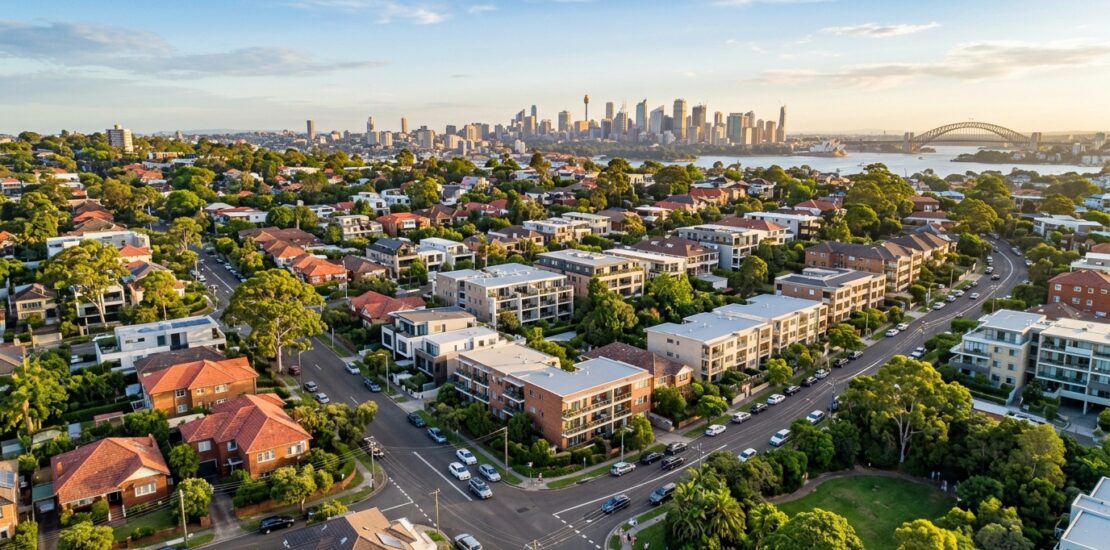
For the first time in years, every capital city posted a gain in the same month.
The property market in January 2020 produced a milestone result. CoreLogic’s national Home Value Index rose 0.9% for the month, with every single capital city recording an increase. That kind of broad-based agreement across all markets is not common, and it signalled that the recovery underway since mid-2019 had real momentum behind it.
If you had been tracking the December 2019 property market update, you would already know that Sydney had just recorded its biggest monthly rise since 1988. January 2020 showed that the strength was not a one-off. The question for buyers and investors was no longer whether the market had turned. It was how quickly values would keep moving.
Here is a breakdown of what happened in January, which cities led the way and what the trends suggested for the rest of 2020.
Capital city results
Melbourne led the capital cities in January, rising 1.2% for the month to a median dwelling value of $681,925. Sydney was close behind at 1.1%, bringing its median to $862,814. Canberra also performed strongly with a median of $630,078.
For a deeper look at what was driving results in the two largest markets, see our guide to the Sydney and Melbourne property market outlook for 2020.
At the other end of the scale, Perth and Darwin both rose just 0.1%. These cities had been dealing with structural headwinds for several years, and a 0.1% monthly gain was less a sign of strength than a sign of stabilisation. Still, even a flat reading was progress compared with the steady declines both cities had experienced throughout much of the 2010s.
Premium vs affordable
One of the clearest patterns in the January 2020 data was the gap between the upper and lower quartiles of the market. Nationally, the upper quartile rose 1.2% for the month while the lower quartile gained just 0.2%. On an annual basis, the gap was even more striking: the upper quartile was up 8.5% while the lower quartile had actually slipped 0.2%.
In Melbourne, upper quartile properties sat at a median of $1,180,110. The lower quartile sat at $614,330. That gap of more than half a million dollars reflected not just different price points but different market dynamics. Premium properties in Melbourne had fallen harder during the 2017 to 2019 downturn, so there was more ground to recover. Annual growth for Melbourne’s upper quartile reached 11.5%, compared with 5.6% for the lower quartile.
Sydney told a similar story. The upper quartile posted annual growth of 10%, well ahead of the lower quartile at 3.4%.
For buyers working with a defined budget, this divergence was meaningful. If your borrowing capacity placed you in the lower quartile, you were still seeing values rise. But if your circumstances allowed you to reach into the upper end, your gains were substantially larger. Use our borrowing power calculator to see which segment of the market your budget could realistically access.
Darwin: a market of contradictions
Darwin was one of the most unusual markets in the country heading into 2020. Its population was actually shrinking. ABS data showed Darwin had dropped by 355 people from a base of 148,564 in 2018. That kind of population decline puts downward pressure on housing demand, which helps explain why close to half of all Darwin dwellings that changed hands were selling at a loss.
And yet Darwin offered something that no other capital city could match: rental yields of 5.8% per annum. For an investor less focused on capital growth and more focused on cash flow, that figure was hard to ignore.
The Darwin story was a reminder that property investment is rarely one-dimensional. A shrinking population and high loss rates on resale suggested caution. But for the right investor with a long-term horizon and a cash-flow strategy, Darwin offered a very different proposition to Sydney or Melbourne.
If you are thinking about investing in a market like Darwin and want to understand how the numbers stack up for your situation, speaking with a broker who understands investment lending is a good first step.
2020 property trends
Beyond the monthly numbers, January 2020 was a useful moment to take stock of the broader trends shaping Australian property for the years ahead. Several forces were already building that would influence where people bought, what they bought and how they financed it.
These trends did not all point in the same direction, but together they described a market undergoing a genuine structural shift rather than just a cyclical bounce. Before you plan your next purchase, make sure you have factored in the full cost of entry by running your numbers through our stamp duty calculator.
Common questions
Q: Why did upper quartile properties outperform lower quartile properties in January 2020?
The premium end of the market had experienced larger falls during the 2017 to 2019 downturn, so there was more ground to recover. On top of that, changes to APRA’s serviceability rules had expanded borrowing capacity for many buyers, and this had a proportionally larger impact at higher price points where small percentage differences in borrowing capacity translate to larger dollar amounts.
Q: Should I have been worried about buying in Darwin in early 2020?
Darwin presented real risks in early 2020. Population was declining, and a large proportion of sellers were taking losses. That is not a profile suited to buyers seeking capital growth. However, rental yields of 5.8% made it attractive to cash-flow focused investors who were comfortable with a market that was illiquid and structurally challenged. As always, your own goals and risk tolerance should drive the decision.