



Housing affordability in Australia has hit a record low. Here is what the latest data means for buyers, renters, and anyone trying to get ahead.
If you have been feeling like buying a home is harder than ever, the numbers back you up. ANZ data from the March 2022 quarter shows that housing affordability Australia-wide has reached its worst point on record. The national dwelling value-to-household income ratio climbed to 8.5, up from 6.8 before the pandemic. That means the average Australian home now costs 8.5 times the average household income. Whether you are saving for your first home, thinking about upgrading, or wondering whether to rent for longer, understanding these figures gives you a clearer picture of where you stand. Use our Borrowing Power Calculator to see what today’s market means for your situation.
Price vs Income
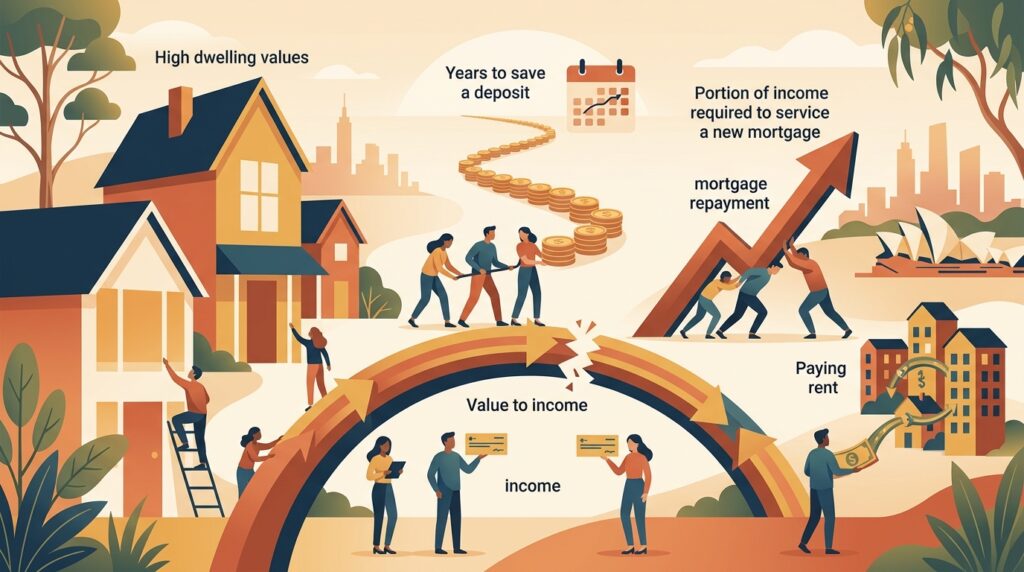
The core measure of housing affordability Australia-wide is the dwelling value-to-income ratio. When this number goes up, it takes more years of income to buy the same home. In March 2022 it hit 8.5 nationally, a record high.
To put that in context, before COVID-19 the ratio sat at 6.8. That jump represents a significant shift in just two years, driven by the surge in property prices during the pandemic boom.
These figures make clear that even regional Australia, long seen as a more affordable alternative, is now stretched for many buyers.
Saving a Deposit
One of the most tangible ways to feel the affordability squeeze is how long it takes to save a 20% deposit. In March 2022 the national average hit 11.4 years. That is a record high, and it is 2.2 years longer than it was in March 2020.
Two extra years of saving is a big deal. It affects when you can buy, what you can afford, and how much rent you pay in the meantime.
If saving a full 20% feels out of reach, there are other options. Some lenders accept a smaller deposit with lenders mortgage insurance (LMI), and government schemes like the First Home Guarantee can help eligible buyers get in with as little as 5%. A broker can walk you through what applies to your circumstances.
Mortgage Repayments
Even once you have bought, the cost of servicing a mortgage has risen sharply. Nationally, 41.4% of household income is now needed to service a new mortgage. That is well above the decade average of 36.5%.
In Sydney the figure is even more stark: 51.3% of income goes toward mortgage repayments on a median-priced property. That leaves less than half a household’s income for everything else.
And the situation was set to get harder. As of mid-2022, ANZ forecast the RBA cash rate to rise to 2.35% by mid-2023. Higher interest rates push up repayments directly. ANZ modelling showed that even if property prices fell by 25%, repayments would still be higher once rates rose by 2.25 percentage points. In other words, a price correction alone would not restore affordability if borrowing costs rise at the same time.
If you want to understand exactly how rate changes affect your repayments, try our Loan Repayment Calculator to run your own numbers. And for context on how the RBA’s decisions flow through to what you can borrow, read our article on the RBA Rate Cut and Borrowing Power.
Rental Costs
For those who cannot yet buy, renting is the alternative. But renting is getting more expensive too. Nationally, 30.6% of income goes toward rent as of March 2022, up from 28.5% in March 2020.
Some rental markets are under extreme pressure. The Richmond-Tweed region in northern NSW is the worst in the country: renters there are spending 53% of their income on rent, up from 45.2% in March 2020. That is more than half a household’s earnings going to a landlord.
These rental pressures also affect the ability to save a deposit. If you are paying more in rent, you have less left over each month to put toward your future home purchase. It becomes a compounding problem.
The pressure renters are facing is one reason why, in some markets, buying is actually cheaper than renting. See the next section for where those opportunities exist.
Where to Buy vs Rent
In a handful of markets across Australia, mortgage repayments on a property are actually lower than the cost of renting an equivalent home. These tend to be in regional and rural areas where prices are low but rental demand from local workers keeps rents high.
These are not typical lifestyle markets, and relocation is a major decision. But the data shows that for buyers who have flexibility on location, the maths can shift significantly in favour of buying rather than continuing to rent.
If you are weighing up whether now is a good time to buy given falling prices in some areas, our article on buying property in a falling market covers the key things to consider.
What This Means for You
The data from March 2022 is sobering, but it does not mean buying a home is impossible. It means you need a clear strategy and good advice.
Here are the practical takeaways:
A good mortgage broker can run the numbers across all of these factors for your specific situation. If you want to understand what you can realistically borrow and what your repayments would look like today versus in 12 months, getting that advice early is worth it.
Common questions
Q: What is the dwelling value-to-income ratio and why does it matter?
It measures how many years of household income it would take to buy the average home outright. A higher number means homes are less affordable relative to what people earn. In March 2022 Australia’s ratio hit 8.5, a record high. The higher this number, the harder it is to save a deposit and the bigger the mortgage you need relative to your income.
Q: How long does it take to save a 20% deposit in Australia in 2022?
Nationally the average is 11.4 years, up from 9.2 years in March 2020. Sydney is the toughest at 14.1 years. Hobart saw the biggest increase, jumping from 7 years to 9.7 years in just two years.
Q: Is it better to buy or rent in 2022?
In most major cities, mortgage repayments on a median property are higher than equivalent rent as a share of income. But in some regional and rural markets, buying is significantly cheaper than renting. The answer depends heavily on your target area, your deposit size, and the interest rate you can secure. A broker can help you compare the real numbers for your situation.
Q: How do RBA rate rises affect housing affordability?
When the RBA raises the cash rate, lenders pass on most of that increase to variable home loan rates. Higher rates mean larger monthly repayments on the same loan amount. ANZ’s modelling from 2022 showed that even a 25% drop in property prices would not fully offset a 2.25 percentage point rise in rates. That is why tracking the RBA’s decisions matters so much for buyers and existing borrowers alike.