



Australia's property recovery picked up real speed in November 2020.
National housing values rose 0.8% in November 2020, following the 0.4% gain in October. Nearly every capital city and regional market recorded a positive result for the month. Canberra and Darwin led the pack at 1.9% each, while Adelaide, Hobart and Perth all climbed more than 1%. Melbourne added 0.7% as it emerged from lockdown, and Sydney rose 0.4%. Brisbane came in at 0.6%. Auction clearance rates hit 70% nationally in November, well above the decade average of 61%. If you are thinking about your next move, it is a good time to check your borrowing power while rates are still at historic lows.
One thing worth noting: houses and units are telling very different stories. Capital city house values rose 1.1% in November, while unit values actually fell 0.6%. If you are comparing property types, that gap is worth keeping in mind.
November snapshot
The CoreLogic home value index for November 2020 confirmed the recovery was broadening. Both city and regional markets contributed to the national 0.8% result, though regional areas were moving more sharply.
Canberra and Darwin each posted 1.9% gains for the month, the strongest of any capital. Adelaide, Hobart and Perth all rose by more than 1%. Melbourne’s 0.7% was a solid result considering it had only just reopened from extended restrictions. Sydney gained 0.4% and Brisbane 0.6%.
On the property type split, capital city houses rose 1.1% while units fell 0.6%. The unit market has been weaker throughout the pandemic, largely because overseas migration has dried up and reduced demand for inner-city apartments. Houses with more space continue to attract stronger buyer interest.
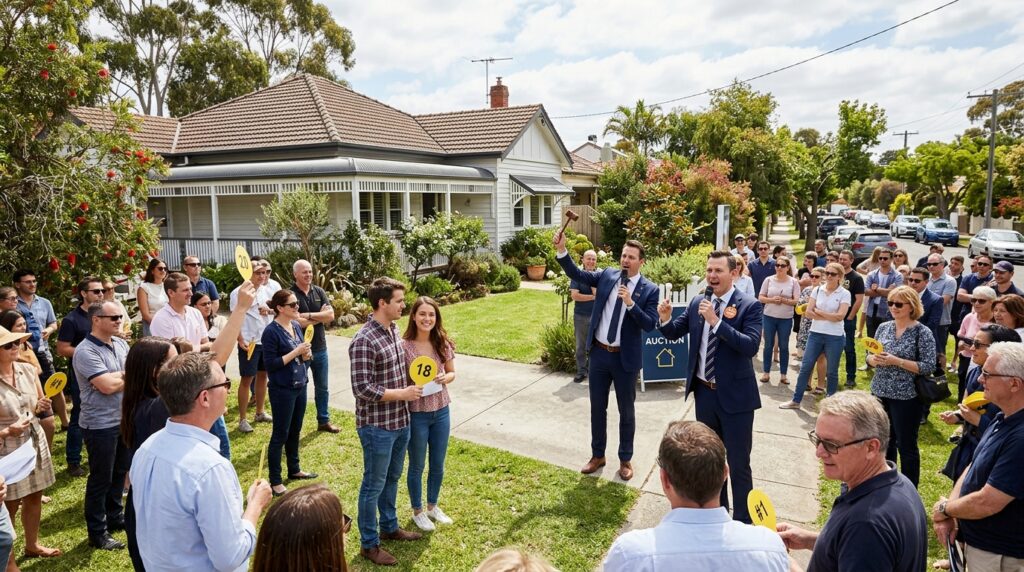
Auction clearance rates of 70% nationally point to healthy demand. Historically, clearance rates above the mid-60s suggest sellers hold the advantage. At 70%, buyers are competing, which puts upward pressure on values.
Regional strength
Regional markets outperformed the capitals in November 2020. Combined regional growth came in at 1.4%, compared to 0.7% for the combined capitals. That gap has been a consistent feature of the 2020 market, and it is widening.
Over the three months to November, Queensland’s regional markets rose 3.2%. New South Wales regional areas were close behind at 3.1%. These are significant gains over a short period and reflect genuine demand, not just a statistical blip.
CoreLogic’s Tim Lawless pointed to two key drivers: low advertised stock and a rising pool of active buyers. When there are fewer homes to choose from and more people looking, urgency builds. Buyers who hesitate risk missing out, which pushes clearance rates up and gives sellers more pricing power.
Owner-occupiers are leading this demand. Low home loan rates are making borrowing more affordable, and government incentives are giving buyers, especially first timers, a financial leg up. See how the market turned positive in October 2020 for context on how this momentum started building.
Why no crash?
When COVID hit in early 2020, many economists and commentators predicted property values would fall sharply. A number of forecasts pointed to double-digit declines. That did not happen. Four factors explain why.
To understand how the RBA rate cut affects your borrowing power in practical terms, our guide walks through the mechanics in plain language.
Bubble concerns addressed
With property values rising and interest rates at record lows, some observers began asking whether Australia was heading toward a housing bubble. RBA Governor Philip Lowe addressed the concern directly, saying he was not worried about dramatic price rises.
His reasoning centred on population dynamics. Sydney and Melbourne, the two cities most often cited in bubble discussions, were actually being most affected by the slowdown in population growth. Overseas migration had essentially stopped, and both cities historically depend heavily on new arrivals for housing demand. With that pipeline shut, price growth in those cities was naturally constrained.
Lowe was also optimistic about the outlook for first home buyers specifically. He noted that rates were low, property prices in many markets were no higher than they had been three years earlier, government incentives were working as intended, and first home buyer demand was strong. Rather than a bubble locking buyers out, Lowe saw conditions that were actually working in their favour.
For anyone who had been watching the market and wondering whether the window had closed, the RBA’s message in late 2020 was that the conditions for buying were still constructive, particularly for owner-occupiers entering for the first time.
Young Australians and homeownership
One of the more striking findings to come out of this period was research from Westpac showing a significant shift in attitudes among young Australians toward homeownership.
Before COVID-19, just 7% of young Australians said they were hoping to buy their first home within the next five years. During the pandemic, that figure doubled to 16%. That is a meaningful shift in a short time.
The motivations behind it were clear:
48% of young Australians said they were more optimistic about entering the property market than they had been 12 months earlier. That is a notable shift given how much uncertainty surrounded the economy at the time.
Perhaps just as interesting: 59% said they had reconsidered the suburb or area where they wanted to live. Lockdowns changed the calculation. Being close to the CBD mattered less when you were working from home. Having space, a backyard, and access to the outdoors mattered more. This drove demand toward regional areas and outer suburban markets where those things were available at a more affordable price.
For a look at how this momentum continued to build, see how momentum continued into January 2021.
Common questions
Q: Why did Australia’s property market not crash during COVID-19?
Four factors worked together to prevent a major crash. The RBA cut the cash rate to 0.1%, making home loans significantly cheaper and bringing more buyers into the market. Banks offered repayment deferrals, which removed the threat of forced sales and kept stock levels low. The workers who lost jobs most heavily during COVID, those in hospitality, tourism and the arts, were less likely to hold mortgage debt, so financial stress did not translate directly into forced property sales. And because the market is not uniform across the country, pockets of decline in inner Melbourne and parts of Sydney did not pull the national average into significant negative territory.
Q: Was the RBA worried about a housing bubble forming in late 2020?
No. RBA Governor Philip Lowe said he was not concerned about dramatic price rises at the time. His view was that Sydney and Melbourne, the cities most associated with housing bubble risk, were actually being held back by slowing population growth as overseas migration stalled. He was also optimistic for first home buyers specifically, noting that rates were low, prices in many markets had not risen beyond where they were three years earlier, and government incentives were helping new buyers get into the market.
Q: Why were young Australians suddenly more interested in buying property?
Westpac research showed the share of young Australians hoping to buy within five years doubled from 7% to 16% during the pandemic. The drivers were a mix of rental fatigue, a desire for stability after the disruption of lockdowns, and a sense that homeownership offered long-term financial security. The pandemic also changed where young buyers wanted to live, with 59% reconsidering their preferred suburb or area. Outer suburban and regional locations became more appealing as remote work reduced the need to commute, and affordability in those areas was considerably better than in the inner city.