



Why rents keep rising and what your options really are.
Australia’s rental affordability crisis has become one of the most pressing financial pressures facing households today. Rents are consuming a record share of household income, available properties have fallen to historic lows, and relief does not appear to be coming quickly. Whether you are a long-term renter reassessing your situation or someone weighing up whether to buy, the figures paint a challenging picture. Before you decide what to do next, it helps to check your home loan borrowing power so you know where you actually stand.
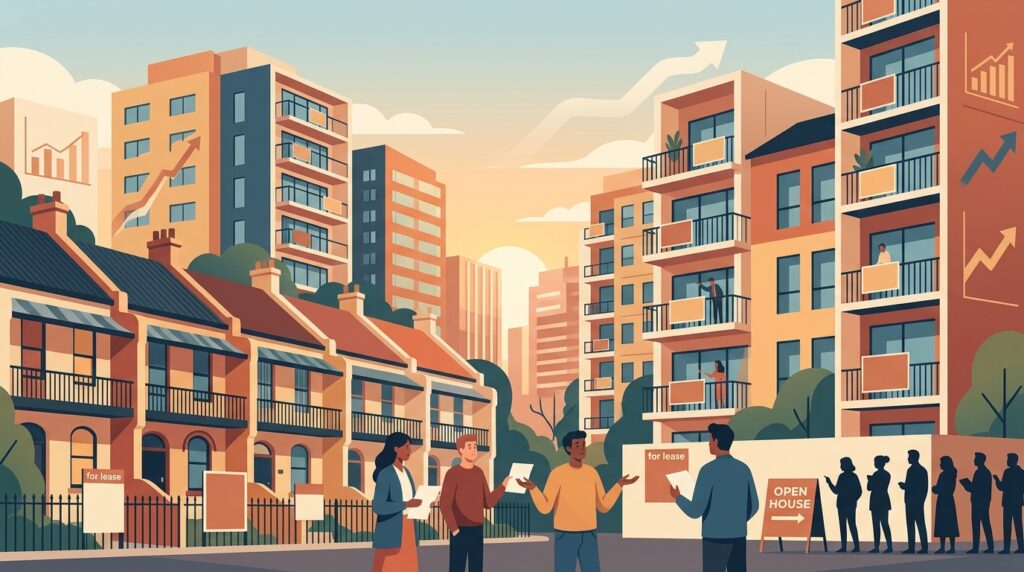
The rental affordability crisis in numbers
The squeeze on renters did not happen overnight. In the years before the pandemic, a low-income household typically spent around 47% of its income on rent. That figure was already uncomfortably high. By March 2023, it had climbed to 51.6%. For a household already stretched thin, that extra 4.6 percentage points can mean choosing between groceries and keeping the lights on.
Across all renter households, the national portion of income going to rent reached 30.8% in 2023, the highest level recorded since June 2014. Rents rose by an average of $115 per week compared to pre-pandemic levels. That is not a small adjustment. That is a permanent, material shift in what it costs to have a roof over your head.
Supply shortage
When supply falls and demand stays strong, prices go up. That basic principle explains a lot of what is happening in the rental market right now.
In April 2023, there were just 91,869 rental properties listed across Australia. That sounds like a lot until you compare it to the peak of 181,493 listings recorded in May 2020. The market has effectively lost half its available stock. Even measured against the decade average of 148,259 listings, current supply is down 38.1%. Renters are competing for a much smaller pool of properties.
Several forces are behind this. Pandemic-era lifestyle shifts, including a wave of people moving away from share houses and into their own places, created around 120,000 additional households according to Reserve Bank analysis. Regional markets saw the biggest surge in demand during this period, with the largest rent growth spike occurring between June 2020 and March 2021. The Sydney and Melbourne property market saw particular disruption as renters shifted their preferences and some investors exited the market entirely.
By early 2023, some regional pockets like Southern Highlands and Shoalhaven were showing signs of cooling, with unit rents falling 5.4% in the first quarter. But these localised dips have done little to ease the broader national picture.
Investor retreat
Private landlords provide the bulk of Australia’s rental housing. When investors stop buying, the pipeline of new rental properties dries up. That is exactly what has happened.
Combined investor lending fell 30% from its January 2022 peak. The maths of buying an investment property simply stopped adding up for many people. Rent might have risen $115 per week over the pandemic period, but weekly mortgage repayments on a new investment purchase jumped by $318 per week over the same period. Rising interest rates turned what looked like a straightforward income play into a loss-making exercise for many would-be landlords.
Some existing investors responded by selling, which removed those properties from the rental pool and put them onto the owner-occupier market instead. Others simply chose not to expand their portfolios. Either way, the rental stock available to tenants shrank.
The most expensive end of the rental market tells its own story. In Sydney’s Eastern Suburbs, the median house rent reached $1,677 per week in 2023. That figure reflects just how far affordability has been stretched in high-demand areas where supply is tightest.
New housing gap
Building more homes is the structural fix the rental market needs. Unfortunately, construction activity has stepped back considerably since the stimulus-fuelled highs of the pandemic.
New dwelling approvals were averaging around 15,000 per month in 2023. That sounds reasonable on its own, but it falls well short of the 23,000 monthly approvals recorded in March 2021, when the federal government’s HomeBuilder grant was in full swing. Once that grant expired, the pipeline contracted sharply and has not recovered.
This gap matters because homes take time to build. A slowdown in approvals today means fewer properties hitting the market in two or three years. The shortfall compounds each month it continues, which is why many analysts expect the rental supply squeeze to persist well into the mid-2020s.
Higher construction costs, labour shortages and planning delays are all contributing to the problem. Even when developers want to build, the environment is more challenging than it was a few years ago.
Is buying right for you?
When rents keep rising and the prospect of stability looks remote, buying starts to look more appealing. It is worth thinking through the comparison carefully rather than making the leap out of frustration.
The case for buying comes down to certainty. A fixed-rate mortgage gives you a repayment that does not change with market conditions. You are building equity rather than funding someone else’s investment. And over time, your repayments stay flat while rents around you keep climbing.
The case for staying put is also real. Buying a home comes with substantial upfront costs. You need a deposit, usually a minimum of 5% to 20% of the purchase price, plus lenders mortgage insurance if your deposit is below 20%. You also need to account for stamp duty costs in your state, conveyancing fees, building inspection reports and other purchase costs that can add tens of thousands of dollars to your outlay before you even get the keys.
The right answer depends on your income, your deposit, your job stability and where you want to live. Some people are genuinely closer to buying than they think. Others need another year or two to get their finances in shape. Either way, knowing your numbers is the essential first step.
A good mortgage broker can show you what you could borrow, what your repayments would look like and whether there are government schemes you might qualify for. That conversation costs nothing and gives you a clear picture of where you actually stand.
Common questions
Q: Who is most affected by the rental affordability crisis?
Low-income renters are carrying the heaviest burden. Before the pandemic, this group was already spending close to half their income on rent. By March 2023 that figure had risen to 51.6%, meaning rent alone was consuming more than half of their total household income. Single-income households, casual workers and people in high-demand city markets face the toughest conditions. Regional renters who benefited from lower rents during the pandemic have also seen sharp increases as city dwellers moved into those markets.
Q: Why did rental listings fall so sharply?
Several things happened at once. During the pandemic, many people who previously shared homes chose to live alone or in smaller households, which created around 120,000 extra households and lifted demand for rental properties. At the same time, investors pulled back from buying, partly because rising interest rates made new investment purchases far less financially attractive. Fewer investors meant fewer rental properties entering the market. The result was a drop from roughly 181,000 listings at the 2020 peak to under 92,000 listings by April 2023.
Q: Should I consider buying instead of renting?
It depends on your situation, but it is worth doing the sums. If your rent is already high and rising, the gap between what you pay each month and what a mortgage might cost could be smaller than you expect. The main barriers to buying are usually the deposit and upfront costs like stamp duty. If you have been saving consistently and have stable employment, speaking to a mortgage broker is a sensible next step. They can tell you exactly what you could borrow and whether any first home buyer schemes apply to your situation.