



Strong growth continued into the Australian winter of 2021.
The property market in May 2021 maintained its remarkable momentum. CoreLogic data showed the national home value index rose 2.2% for the month, up from 1.8% in April. While the pace fell short of the 32-year high of 2.8% recorded in March 2021, the market remained firmly in boom territory.
Combined capital city values rose 2.3% while regional areas recorded a 2% increase. It was the second time in three months that capital city growth outpaced regional markets, a small shift from earlier in the year when regional areas had led the charge.
For a market context on how this period compares to the start of the year, see our review of the property market in January 2021.
City-by-city results
Darwin led the annual growth rankings with values up 20.3% over the prior 12 months. Regional New South Wales followed at 18.6% and Regional Tasmania at 18.1%.
Sydney continued to post fast monthly gains. At the other end of the spectrum, Melbourne’s extended lockdowns kept its annual growth rate at just 5%, by far the weakest of the major capitals.
Regional Western Australia was the softest market overall, recording 0% annual growth. This underscored how uneven the national recovery had become, with some markets surging while others stalled.
Sales and listings
New listings were tracking 15% above the five-year average in May 2021, yet sales volumes were running 37% above that same average. That is a significant gap. For every new listing that came onto the market, there was roughly one sale. This near one-to-one absorption rate kept total advertised supply well below normal levels despite the rise in fresh listings.
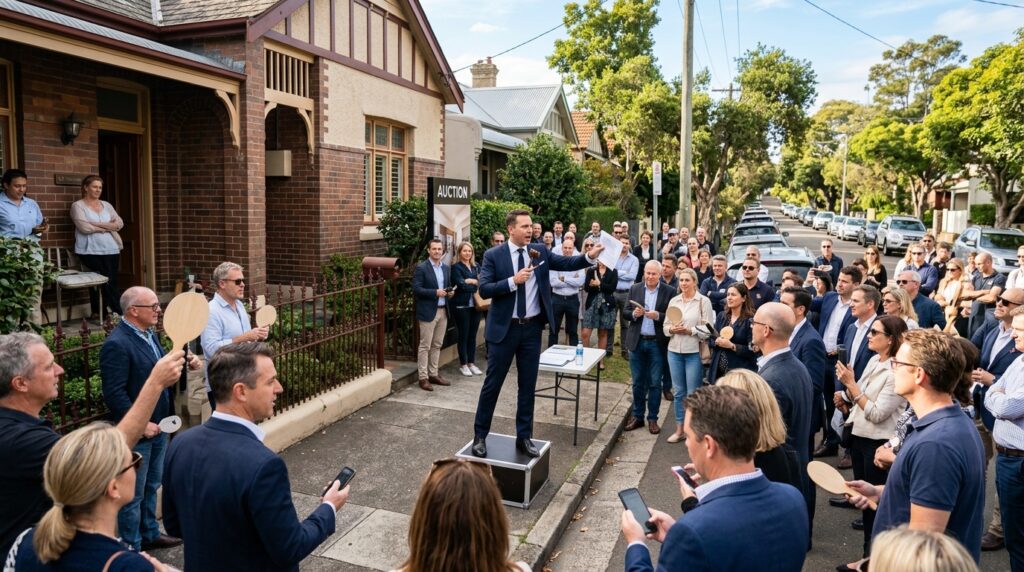
Auction clearance rates reflected this demand. Throughout May, clearance rates held at 70%, above the decade average of 64%. The median time on market was just 25 days and vendors were discounting by an average of 2.7% on asking prices.
Tim Lawless of CoreLogic summed up the conditions: improving economic conditions and low interest rates were feeding consumer confidence, which in turn was creating persistently strong housing demand against a backdrop of tight supply.
Who was growing fastest
The top end of the market was driving the bulk of the capital gains in May 2021. Across combined capitals, the upper-quartile segment rose 9.2% over the three months to May, compared with just 4.2% for the lower quartile.
This divide was most pronounced in Sydney and Melbourne. In Sydney, upper-quartile values rose 12% over three months while the lower end gained 5.2%. In Melbourne, the gap was 6.5% for the top quartile versus 3.5% for the bottom.
Hobart and Darwin told a different story. In those markets, it was the lower quartile performing more strongly. Darwin recorded 12.4% growth in its lower quartile over three months, compared with 4.7% in the upper quartile. Hobart’s lower quartile rose 9.9% versus 6.6% at the top. These markets were more accessible, and buyers were responding accordingly.
If you are thinking about where your budget fits in today’s market, it is worth taking a moment to check your borrowing power before committing to a search.
Rental market
While property values surged, rental yields were under pressure in most capital cities. The average gross rental yield across combined capitals fell to 3.2% in May 2021, down from 3.5% a year earlier. Rising property values without equivalent rent growth squeezed yields for investors.
Closed international borders were hitting Sydney and Melbourne hardest. House rents in Sydney rose just 2% and unit rents 1.8% over three months. Melbourne was even softer at 0.9% for houses and 0.4% for units.
Darwin and Perth were exceptions. In Darwin, house rents rose 21.9% over the year and unit rents climbed 17%. Perth recorded 16.6% annual growth in house rents and 14.2% for units. Both markets had tight rental supply and strong local demand.
For investors returning to the market after a cautious period, understanding the rental dynamics in your target city was essential to making a sound decision. Our article on property investment strategies covers the key considerations for building a portfolio in a rising market.
Common questions
Q: Why did property prices keep rising in May 2021 despite already strong growth earlier in the year?
The combination of low interest rates, strong consumer confidence, improving employment conditions and tight advertised supply kept upward pressure on values. Buyers were competing hard for limited stock, and auction clearance rates above 70% showed that demand was comfortably outstripping supply.
Q: Was it still a good time to buy in May 2021 despite rising prices?
That depended on your financial position and long-term goals. Many buyers who waited for prices to drop ended up paying more later in 2021. Getting pre-approved for a home loan and understanding your budget was the best starting point, regardless of market timing.
Q: Which markets offered the best value for buyers in May 2021?
Darwin and Perth were among the more accessible capital city markets relative to income, and both were seeing strong demand. Regional Queensland and regional New South Wales also offered more affordable entry points compared with Sydney and Melbourne, and both posted solid annual growth.